M.Voc in Optometry Technology
“See the Future Clearly. Develop Your Skills. Shape a Vision-Care Career.”
University-Led Education. Practical Training. Professional Skill Development.
Discover postgraduate vocational education in Optometry Technology through a learning approach that connects academic knowledge with practical understanding, vision care technology, optical competencies, patient interaction, and professional skill development.
At Lohiya MediTech, we believe healthcare education should go beyond classroom learning. Our educational approach emphasizes university-led education, practical training, technical competency development, and professional learning to help students understand the evolving field of vision care and optometry.
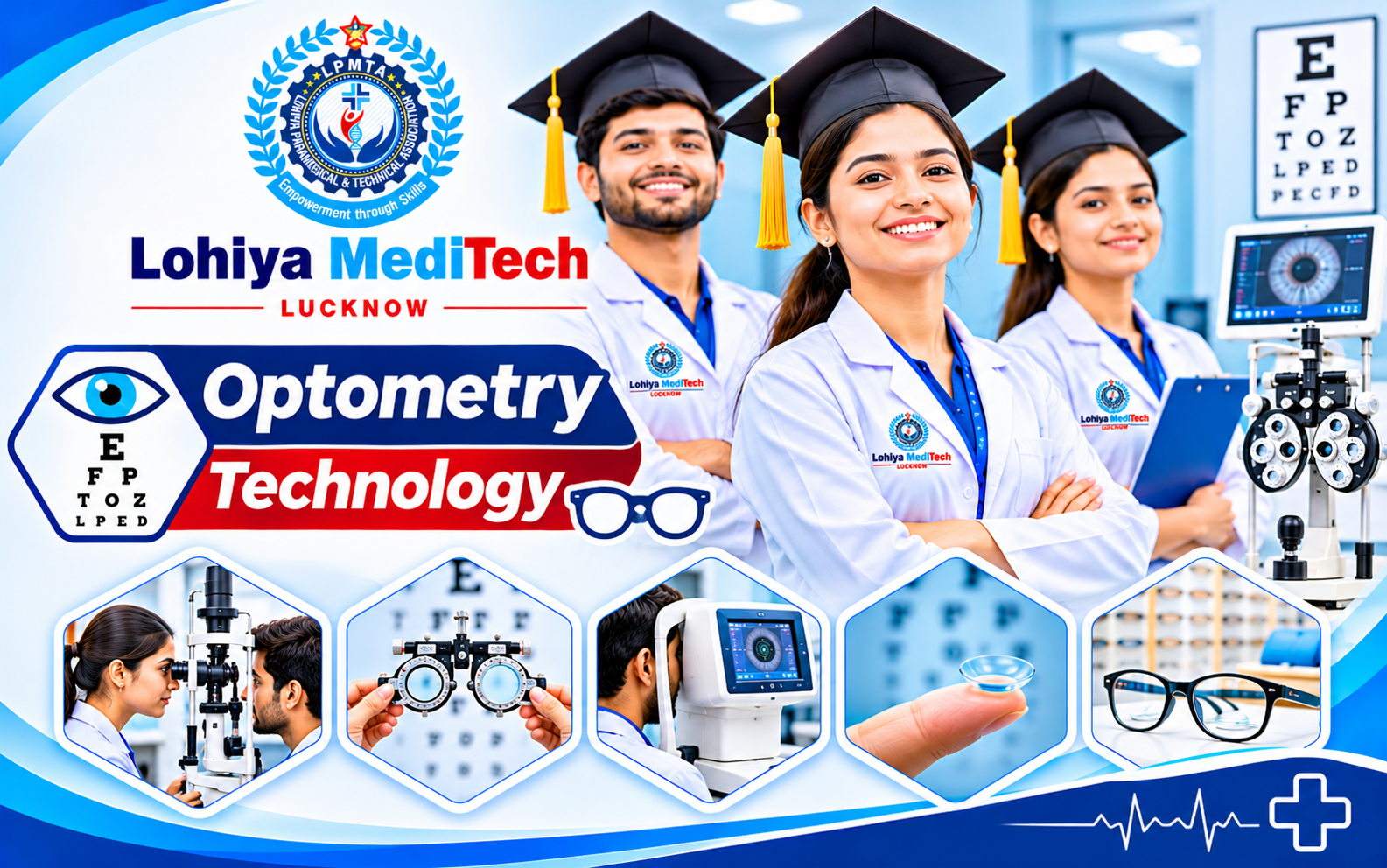
Advancing Knowledge in Vision Care & Optometry
“Understand Vision. Explore Technology. Develop Professional Skills.”
Postgraduate Vocational Learning in Optometry Technology
M.Voc in Optometry Technology is a postgraduate vocational learning pathway offered at Lohiya MediTech in association with a UGC-recognised awarding university, focused on advanced knowledge, practical understanding, optometric technology, vision assessment concepts, optical sciences, patient care awareness, and professional competency.
Vision care, optical technology, eye examination systems, and professional competency play an essential role in modern healthcare. Optometry Technology is a vital healthcare learning field where structured education, patient care awareness, and professional responsibility support vision health services within authorized scopes.
How Optometry & Vision Care Contribute
- Visual health and vision assessment
- Identification of visual problems
- Understanding refractive errors
- Optical correction and lens concepts
- Eye care awareness
- Visual rehabilitation concepts
- Patient education
- Supporting eye health services
- Understanding the role of vision care professionals
Education Beyond Theory. Skills Beyond the Classroom.
“Knowledge helps you understand vision. Practical learning strengthens your skills. Professional education prepares you to serve with confidence and responsibility.”
Beyond Academic Textbooks
Healthcare education should not be restricted to academic textbooks. Learners need an understanding of technology, practical concepts, patient interaction, professional communication, workplace discipline, technical competency, and responsible healthcare practice.
Lohiya MediTech focuses on connecting academic qualifications with practical understanding and professional competency in eye care and optical learning environments.
At Lohiya MediTech, We Emphasize
- University-led academic education
- Practical-oriented learning
- Technical competency development
- Optometry and vision care awareness
- Optical technology understanding
- Professional skill development
- Patient-centred learning
- Workplace-oriented education
- Ethical and responsible professional conduct
- Continuous learning and skill enhancement
Three Pillars of Learning. One Vision for Professional Growth.
“Learn the Science. Practice the Skills. Prepare for the Profession.”
University-Led Education
“Build Your Knowledge. Strengthen Your Academic Foundation.”
University-led education provides the foundation of the learner's academic journey in Optometry Technology and vision care sciences.
- Structured university curriculum
- Academic learning
- Ocular anatomy and physiology
- Optometry fundamentals
- Vision science concepts
- Optical principles
- Refractive error concepts
- Academic progression
- University-led degree education
Practical Training
“Knowledge Becomes Meaningful When You Put It into Practice.”
Practical learning helps students understand how academic concepts connect with optometric instruments, vision care environments, patient interaction, and professional responsibilities. Any clinical activities must be conducted only under appropriate qualified supervision and within applicable professional and regulatory requirements:
- Eye examination equipment familiarization
- Vision assessment demonstrations
- Optical instrument orientation
- Lens and optical concepts
- Visual acuity assessment learning
- Refractive assessment concepts
- Basic eye care procedures awareness
- Practical demonstrations
- Patient interaction learning
- Supervised practical competency development
Professional Skill Development
“Develop the Skills. Build Confidence. Grow Professionally.”
Vision care requires technical understanding as well as patient-centred communication, professionalism, responsibility, and confidence.
- Patient communication
- Professional behaviour
- Teamwork
- Workplace discipline
- Patient comfort awareness
- Ethical conduct
- Attention to detail
- Technical awareness
- Time management
- Documentation awareness
- Problem-solving
- Adaptability
- Continuous learning
The Lohiya MediTech Advantage
“We Connect Education with Skills. We Connect Learning with the Vision-Care Profession.”
UNIVERSITY-LED EDUCATION
Academic learning under the awarding university's programme, curriculum, academic requirements, and applicable policies.
PRACTICAL-ORIENTED LEARNING
Connecting theoretical concepts with practical demonstrations, technical learning, supervised activities, and competency development.
OPTOMETRY TECHNOLOGY ORIENTATION
Developing an understanding of vision assessment systems, optical instruments, eye care technology, and evolving optometric equipment.
PROFESSIONAL SKILL DEVELOPMENT
Enhancing communication, teamwork, patient interaction, professional conduct, and workplace readiness.
VISION CARE INDUSTRY PERSPECTIVE
Understanding the professional environment, responsibilities, workflows, technology, and expectations of eye care and optical services.
COMPETENCY-FOCUSED EDUCATION
Emphasizing knowledge, practical understanding, relevant technical competencies, and professional development.
STUDENT-CENTRED LEARNING
Supporting learners through educational guidance, learning support, skill development, and professional awareness.
FUTURE-FOCUSED EDUCATION
Encouraging adaptability, continuous learning, technology awareness, and understanding of changing vision care practices.
Bridging the Gap Between Academic Education and Healthcare Industry Skills
“From Classroom Knowledge to Vision-Care Competency.”
The Gap Students Need to Understand
Academic education provides a foundation, but healthcare and vision care environments also require practical understanding, technical competency, patient communication, workplace discipline, safety consciousness, teamwork, and adaptability.
- Academic knowledge versus practical understanding
- Textbook concepts versus application
- Optical theory versus instrument familiarization
- Learning vision sciences versus understanding professional workflow
- Qualification versus competency development
- Classroom education versus workplace awareness
- Technical knowledge versus patient interaction
Lohiya MediTech's Learning Approach
Our integrated learning pathway links academic knowledge and optical technology concepts with practical skill building and vision care workplace awareness.
“Education builds understanding. Practical learning develops competency. Professional skills help turn knowledge into meaningful contribution.”
Discover the Science of Vision
“Understanding Eyes. Exploring Optical Science. Advancing Vision Care.”
Vision care involves understanding the eye, visual function, optical principles, vision assessment, refractive correction concepts, eye care technology, and patient education—within authorized scopes of practice.
VISION ASSESSMENT
Introduction to visual acuity, visual function, and assessment concepts.
REFRACTIVE ERROR
Understanding myopia, hyperopia, astigmatism, and presbyopia and their relationship to vision correction.
OPTICAL TECHNOLOGY
Understanding optical principles, lenses, and technology used in vision correction.
EYE EXAMINATION EQUIPMENT
Introduction to optometric instruments and eye examination equipment used in professional vision care environments.
CONTACT LENS TECHNOLOGY
Introduction to contact lens types, optical principles, care concepts, and relevant professional considerations, where included in the approved curriculum.
EYE HEALTH AWARENESS
Understanding the importance of eye health, preventive awareness, patient education, and referral considerations.
Develop Knowledge Across Vision Sciences & Optometry Technology
“Learn the Principles. Understand the Technology. Strengthen Your Competencies.”
Advanced Optometry
Postgraduate concepts in optometry science.
Ocular Anatomy & Physiology
Structure and function of the human eye.
Advanced Vision Science
Visual perception and optical systems.
Clinical Optometry Concepts
Structured vision care learning concepts.
Refractive Error & Optical Correction
Principles of refractive correction and lenses.
Ophthalmic Instrumentation
Orientation to vision testing instruments.
Optical Dispensing Concepts
Eyewear and lens dispensing principles.
Lens Technology
Optical materials, designs, and properties.
Contact Lens Concepts
Core concepts where part of approved curriculum.
Binocular Vision
Coordination of both eyes in visual tasks.
Visual Assessment Techniques
Foundational vision evaluation methods.
Eye Health & Ocular Disorders Awareness
Awareness of ocular conditions and referrals.
Patient Care & Communication
Empathetic and clear patient interaction.
Eye Care Practice Management
Operational awareness in eye care settings.
Quality & Professional Practice
Quality standards and ethical responsibility.
Research Methodology
Systematic investigation and analytical skills.
Emerging Vision Care Technologies
Evolving tools and innovations in vision care.
Learn by Understanding. Develop by Practicing.
“Practical Learning Is the Connection Between Knowledge and Competency.”
Connecting Academic Concepts & Vision Care Practice
Practical training supports the understanding of academic concepts and helps students develop awareness of professional vision care environments.
Patient-related practical learning must be supervised and conducted according to applicable professional and regulatory standards.
Practical & Competency-Based Activities
- Vision testing equipment familiarization
- Visual acuity assessment concepts
- Optical instrument familiarization
- Lens identification and understanding
- Refractive assessment concepts
- Optical dispensing concepts
- Eye examination workflow awareness
- Patient preparation concepts
- Instrument handling awareness
- Practical demonstrations
- Supervised learning activities
- Patient interaction and communication
- Eye care documentation concepts
- Technical skill development
Vision Care Is More Than Technology. It Is About People.
“Behind Every Eye Examination Is a Person Who Deserves Care, Respect and Understanding.”
Compassion, Respect & Responsibility in Vision Care
Optometry involves not only optical instruments and technology, but also caring, communication, responsibility, and respect for every individual.
- Patient dignity
- Respectful communication
- Patient comfort
- Privacy and confidentiality
- Listening to patient concerns
- Clear communication
- Professional behaviour
- Ethical responsibilities
- Infection prevention awareness
- Patient safety
- Team coordination
- Responsible healthcare practice
“Technology helps us understand vision. Compassion helps us understand the person behind it.”
Beyond the Classroom – Understanding the Vision Care Profession
“Experience the Learning Environment. Understand the Profession. Develop Your Perspective.”
Potential Professional Learning Environments
Where applicable within the programme framework, learners may explore settings such as:
- Optometry clinics
- Eye care centres
- Optical dispensing facilities
- Ophthalmic departments
- Vision care facilities
- Eye hospitals
- Optical laboratories
- Healthcare institutions
Value of Workplace-Oriented Learning
- Understanding vision care workflow
- Observing professional responsibilities
- Learning about patient interaction
- Understanding eye examination processes
- Familiarization with optical equipment
- Learning about optical dispensing environments
- Developing communication skills
- Workplace awareness
- Professional conduct
Beyond Optical Technology – Developing the Professional
“Your technical knowledge is your strength. Your ability to care, communicate and act responsibly defines your professional value.”
| Professional Skill | Why It Matters |
|---|---|
| Patient Communication | Supports clear and respectful interaction |
| Empathy | Helps understand patient concerns |
| Teamwork | Encourages coordinated healthcare work |
| Professional Discipline | Develops responsible work habits |
| Attention to Detail | Supports careful technical work |
| Patient Comfort | Improves awareness of patient needs |
| Time Management | Helps understand workplace priorities |
| Adaptability | Supports learning new technologies |
| Ethical Conduct | Encourages privacy and responsibility |
| Continuous Learning | Supports ongoing professional growth |
Explore Your Future in Vision Care
“Build Your Knowledge. Strengthen Your Skills. Explore Your Professional Potential.”
Potential career and professional areas in Optometry Technology depend on qualifications, experience, employer requirements, and applicable regulations:
Optometry Professional
Vision care and optical support roles where eligible.
Vision Care Professional
Supporting vision health and eye care services.
Optometry Assistant or Technical Support Roles
Technical assistance where eligible.
Optical Dispensing Professional
Eyewear and optical dispensing support.
Optical Retail & Technical Services
Optical service and technical environments.
Eye Care Centre Technical Roles
Supporting clinical vision care facilities.
Vision Assessment Support Roles
Assisting with structured vision screening.
Ophthalmic Equipment Support
Equipment readiness and technical support.
Optical Laboratory Services
Lens and optical lab workflow support.
Contact Lens-Related Technical Services
Technical support where applicable and permitted.
Eye Care Operations
Operational coordination in eye care centres.
Vision Care Education Support
Academic and training support roles.
Research and Technical Support
Supporting research and vision studies.
Healthcare Technology Services
Evolving healthcare technology support.
Take the Next Step in Your Educational Journey
“For Learners Who Want to Advance Their Knowledge and Strengthen Their Vision-Care Skills.”
Who Should Explore M.Voc. in Optometry Technology?
- Graduates in Optometry
- B.Voc. graduates in Optometry Technology
- Graduates with relevant eye care qualifications
- Healthcare professionals seeking academic advancement
- Candidates interested in optical technology
- Learners interested in vision care and eye health
- Candidates seeking advanced vocational education
- Individuals interested in technical and professional skill development
Awarding University Eligibility Norms
Eligibility criteria, accepted qualifications, and admission rules follow the awarding university's officially prescribed admission requirements for the relevant academic session.
Please contact the Lohiya MediTech admission office for the latest official admission guidelines from the awarding university.
Your Journey from Education to Professional Development
BUILD ACADEMIC KNOWLEDGE
Develop an understanding of vision sciences, optometry, ocular anatomy, and relevant academic concepts.
UNDERSTAND OPTICAL TECHNOLOGY
Learn about lenses, optical principles, vision assessment systems, and relevant instruments.
DEVELOP PRACTICAL COMPETENCIES
Strengthen technical understanding through practical learning and appropriate supervised activities.
LEARN PATIENT CARE & COMMUNICATION
Understand patient dignity, communication, comfort, ethical conduct, and professional responsibilities.
ENHANCE PROFESSIONAL SKILLS
Develop teamwork, confidence, discipline, problem-solving, adaptability, and professional awareness.
EXPLORE YOUR CAREER PATH
Understand potential professional pathways, workplace expectations, further education, and continuous development.
Education That Connects Knowledge with Skills
“The Future Belongs to Learners Who Combine Knowledge with Competency.”
Practical Understanding & Application
Vocational education complements academic learning by emphasizing practical understanding, competency development, application of knowledge, and professional growth in healthcare.
Key Highlights
- Academic knowledge
- Practical learning
- Technical competency
- Optical technology understanding
- Workplace awareness
- Professional skill development
- Industry-oriented learning
- Continuous education
- Career awareness
Your Learning. Your Skills. Your Future.
“At Lohiya MediTech, we believe education should empower learners with knowledge, strengthen their skills, and inspire them to become responsible healthcare professionals.”
Academic Learning
Supporting structured postgraduate study.
Educational Guidance
Thoughtful academic guidance for learners.
Practical Skill Development
Connecting theory with practical concepts.
Professional Competency
Building technical and workplace readiness.
Vision Care Industry Awareness
Understanding eye care and optical settings.
Career Development
Supporting informed exploration of career paths.
Student Confidence
Encouraging confidence through preparation.
Continuous Improvement
Growing steadily across academic stages.
Responsible Professional Conduct
Upholding safety, ethics, and patient respect.
Lifelong Learning
Adapting to evolving vision care practices.
Building a Stronger Connection Between Education and Healthcare
OUR VISION
Central Positioning: “Lohiya MediTech – Bridging the Gap Between Academic Education and Healthcare Industry Skills.”
OUR MISSION
- Promote university-led academic education.
- Strengthen practical and competency-oriented learning.
- Connect academic concepts with vision care technology.
- Encourage professional skill development.
- Develop patient care and communication awareness.
- Support career-oriented vocational education.
- Encourage adaptability and continuous learning.
- Bridge the gap between academic education and healthcare industry skills.
Key Messages Across the Learning Journey
Primary Brand Tagline
“University Education. Practical Training. Professional Skills. One Path to a Stronger Future.”
Lohiya MediTech Positioning
“Bridging the Gap Between Academic Education and Healthcare Industry Skills.”
Optometry Tagline
“See the Future Clearly. Understand Vision. Develop the Skills.”
Education Quote
“Knowledge gives you the foundation. Practical learning gives you perspective. Skills help you move forward.”
Practical Learning Quote
“Beyond Theory. Beyond Textbooks. Towards Practical Competency.”
Professional Development Quote
“A qualification reflects your education. Your skills, attitude and dedication shape your professional journey.”
Vision Care Quote
“Clear Vision Changes Lives. Skilled Learning Shapes Professionals.”
Student Motivation Quote
“Learn with Purpose. Practice with Responsibility. Grow with Confidence.”
Career Quote
“Your future is not just about what you study. It is about the knowledge you build and the skills you develop.”
Lohiya MediTech Brand Quote
“At Lohiya MediTech, education is the beginning. Skill development is the journey. Professional growth is the vision.”
Future-Focused Quote
“Preparing learners for a healthcare world driven by technology, knowledge, skills and compassion.”
Premium Closing Quote
“Bringing Education Closer to Industry. Bringing Skills Closer to Opportunity.”
Frequently Asked Questions
Clear answers on M.Voc in Optometry Technology at Lohiya MediTech
M.Voc in Optometry Technology is a postgraduate vocational education pathway offered at Lohiya MediTech in association with a UGC-recognised awarding university, combining university-led academic learning with practical training and professional skill development in vision care and optometry.
The programme focuses on advanced academic understanding, optometric technology orientation, practical learning, patient care and communication awareness, and professional competencies within authorized scopes of practice.
B.Voc. (Bachelor of Vocation) is an undergraduate vocational degree programme, whereas M.Voc. (Master of Vocation) is a postgraduate vocational degree pathway advancing academic depth, technical understanding, and professional competencies.
Graduates in Optometry, B.Voc. graduates in Optometry Technology, graduates with relevant eye care qualifications, healthcare professionals seeking academic advancement, and interested learners may explore eligibility as prescribed by the awarding university.
Indicative learning areas include ocular anatomy and physiology, vision science, refractive error and optical correction concepts, ophthalmic instrumentation, lens and contact lens concepts, binocular vision, patient care, and research methodology, subject to the officially approved university curriculum.
Yes. Practical-oriented learning is a core pillar at Lohiya MediTech, with patient-related practical activities conducted under appropriate qualified supervision and within applicable professional and regulatory standards.
Students explore vision assessment, refractive error concepts (such as myopia, hyperopia, astigmatism, and presbyopia), optical technology, eye examination equipment, contact lens concepts where included in the approved curriculum, and eye health awareness.
Yes. Familiarization with vision testing systems, optical instruments, lens concepts, and safety protocols is emphasized within authorized and supervised learning boundaries.
Yes. Patient dignity, comfort, privacy, listening skills, clear communication, infection prevention awareness, and ethical conduct are emphasized alongside technical learning.
Depending on qualifications, experience, employer criteria, and applicable regulations, learners may explore roles in optometry clinics, eye care centres, optical dispensing and retail/technical services, equipment/lab support, and vision care operations.
Programme duration and academic structure are governed by the awarding university's approved curriculum for the applicable academic session. Please contact the admission office for current details.
The degree is awarded by the UGC-recognised awarding university under its applicable rules and regulations; Lohiya MediTech and LPMTA are not independent degree-awarding bodies.
Lohiya MediTech integrates university-led education, practical training, and professional skill development—bridging the gap between academic education and healthcare industry skills.
You can contact our admission office by phone at +91-90050-20000, via WhatsApp enquiry, by email at lohiyaoffice@gmail.com, or through the admission enquiry section on our website.